Magnolia Script Embroidery Font - Large
First Impressions: Grace That Stitches Well
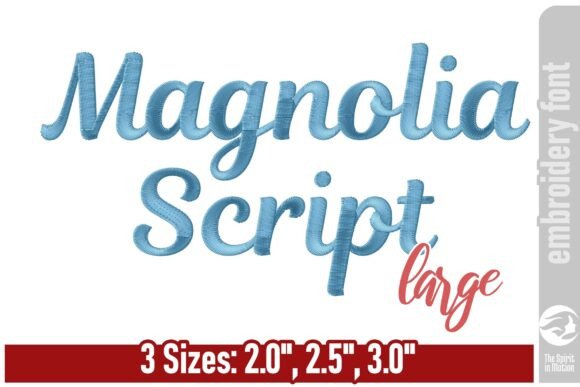
When I opened Magnolia Script Embroidery Font - Large, what struck me wasn’t just its elegance—it was how *intentional* the flow felt. This isn’t a script that leans too hard into whimsy or sacrifices legibility for flair. The connections between letters are smooth but not overly slurred; the curves are soft, not droopy. It carries quiet confidence—like handwriting you’d trust on a wedding invitation or a boutique baby blanket. As a designer who’s stitched hundreds of names and monograms, I immediately pictured it on a linen tea towel, a cream-colored sweatshirt, or the curved front panel of a structured tote bag.
A Real-World Test: Stitching “Elena” on a Cotton-Linen Tote
Last week, I used Magnolia Script Embroidery Font - Large to embroider “Elena” across the bottom third of a medium-weight cotton-linen tote—exactly the kind I sell at local craft fairs. I chose a 40-weight rayon thread in warm taupe on off-white fabric, with medium tear-away stabilizer underneath. The result? Clean, fluid lettering with gentle tapering at the entry and exit points—no skipped stitches, no thread nesting. The font’s natural rhythm translated beautifully into satin stitch paths: consistent width, balanced spacing, and enough open space between letters to avoid visual crowding. Customers consistently pause at this tote—not just because of the fabric, but because the name feels *considered*, not stamped.
Where It Shines (and Where It Needs Thought)
Magnolia Script Embroidery Font - Large excels in projects where elegance supports intent—not overshadows it:
- Custom apparel: Works especially well on sweatshirts and lightweight jackets where drape matters more than stiffness.
- Baby embroidery: Soft curves read as nurturing, not fussy—ideal for onesies, burp cloths, or nursery wall hangings.
- Personalized gifts: Elevates holiday embroidery, wedding gifts, and milestone keepsakes without looking dated.
- Etsy listings and small shop products: Adds perceived value instantly—buyers associate this script with care and craftsmanship.
But let’s be practical: this font isn’t built for every surface. On stretchy knits or thin voile, the long connecting strokes can distort if stabilizer isn’t layered thoughtfully. On dark fabric, fine interior details may soften unless thread contrast is strong. And on curved surfaces like caps? Test first—the outermost letters may compress slightly depending on hoop placement and fabric tension.
Design Integrity Meets Commercial Reality
As an embroidery product reviewer and working designer, I judge fonts not just by how they look on screen—but how they hold up after washing, wear, and customer handling. Magnolia Script Embroidery Font - Large avoids over-stitching in tight corners, which means less thread buildup and better durability on items like kitchen towels or aprons. Its moderate stitch density gives breathability without sacrificing definition—critical for handmade products meant to last beyond one season.
For Etsy sellers and creative entrepreneurs, this matters deeply. A clean, confident script builds buyer trust faster than ornate alternatives. It reads as professional, not DIY-casual. When customers see “Elena” stitched this way on a pillow cover, they don’t question whether it’s machine-made—they wonder who designed it. That subtle shift from “product” to “crafted piece” lifts perceived value—and justifies pricing that sustains your craft business.
What You Should Actually Do Before Stitching
Don’t skip these steps—even if you’ve used dozens of script fonts before:
- Test on scrap fabric that matches your final project’s weight and texture. Linen behaves differently than cotton poplin, and both react uniquely to satin stitch flow.
- Check thread color contrast in natural light—not just under your machine lamp. Some soft grays and creams disappear on light backgrounds when stitched.
- Review stitch density in your embroidery software. If interior loops feel too tight, adjust pull compensation slightly to prevent puckering.
- Confirm hoop size compatibility. “Large” in the title suggests generous letter height—but verify minimum recommended hoop dimensions before digitizing full names.
- Inspect small details like the tail of the “y” or the loop in the “g”. These are where stitching inconsistencies show first.
- Test black-and-white mockups for digital previews. What reads as delicate on screen may vanish in grayscale product photos.
- Use proper stabilizer—especially for textured fabrics like terry cloth or bouclé. A single layer of cutaway often saves more time than re-hooping.
- Verify licensing before selling finished items or bundling the embroidery file as part of a digital product. Not all Embroidery Fonts include commercial use rights by default.
Final Thought: A Font That Earns Its Place
Magnolia Script Embroidery Font - Large doesn’t shout. It invites. It’s the kind of embroidery font that makes clients say, “Yes—that’s exactly how I imagined it.” Whether you’re stitching a personalized gift, building a cohesive line of embroidered home goods, or designing digital embroidery files for other makers, this script delivers quiet authority. It respects the fabric. It honors the hand behind the machine. And most importantly—it translates intention into stitch, reliably, every time.